Kiswahili, commonly known as Swahili, is one of Africa’s most widely spoken languages and an important language of unity, culture, trade, and communication. According to the United Nations, Kiswahili serves as a lingua franca in more than 14 African countries. It is widely used across East, Central, and parts of Southern Africa.
More than 200 million people speak Kiswahili worldwide, according to UNESCO. The language has also received international recognition: World Kiswahili Language Day is celebrated every year on July 7, and Kiswahili is used by major African and international institutions.
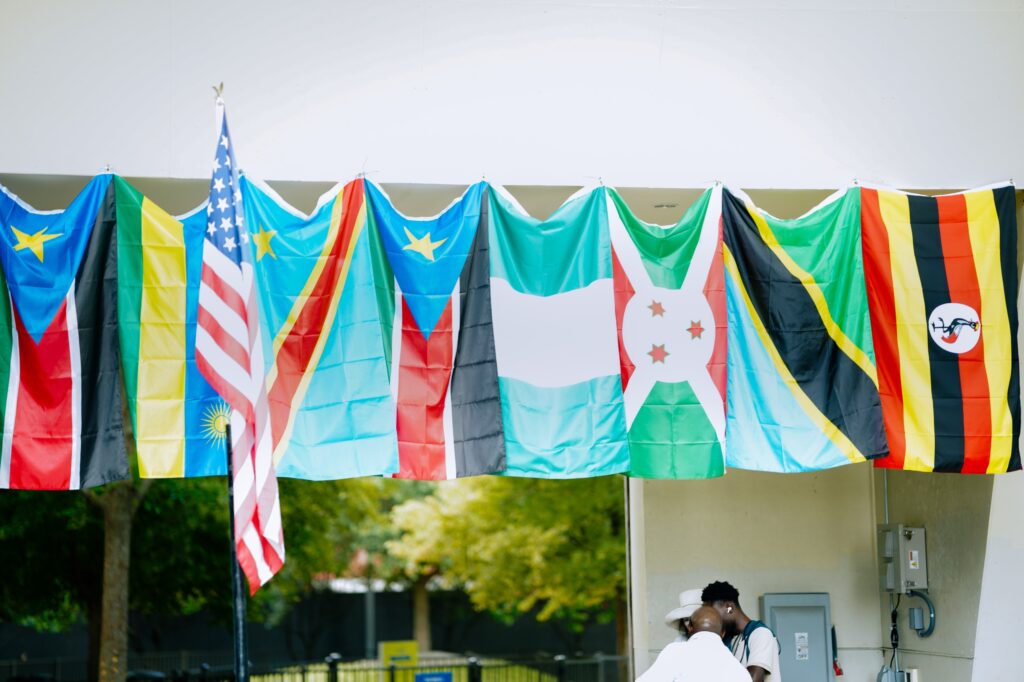
Kiswahili is spoken in communities connected to countries including Tanzania, Kenya, Uganda, Rwanda, Burundi, the Democratic Republic of the Congo, South Sudan, Somalia, Mozambique, Malawi, Zambia, and Comoros, with its influence extending to other parts of Africa and beyond.
KISWAHILI IN NORTH CAROLINA AND MINNESOTA
North Carolina and Minnesota are home to growing East and Central African immigrant and refugee communities, including people from countries where Kiswahili is widely spoken. However, there is currently no reliable official statewide count of Kiswahili speakers alone in either state. U.S. Census language tables group Swahili together with several other Central, Eastern, and Southern African languages, including Ganda, Kinyarwanda, and Lingala. For that reason, Swahili Day does not publish an unsupported exact number. As the movement grows, we hope to work with community partners to better document and understand the Kiswahili-speaking population in North Carolina and Minnesota.